 inquiry@findyourcar.me
  +971 58 510 1097




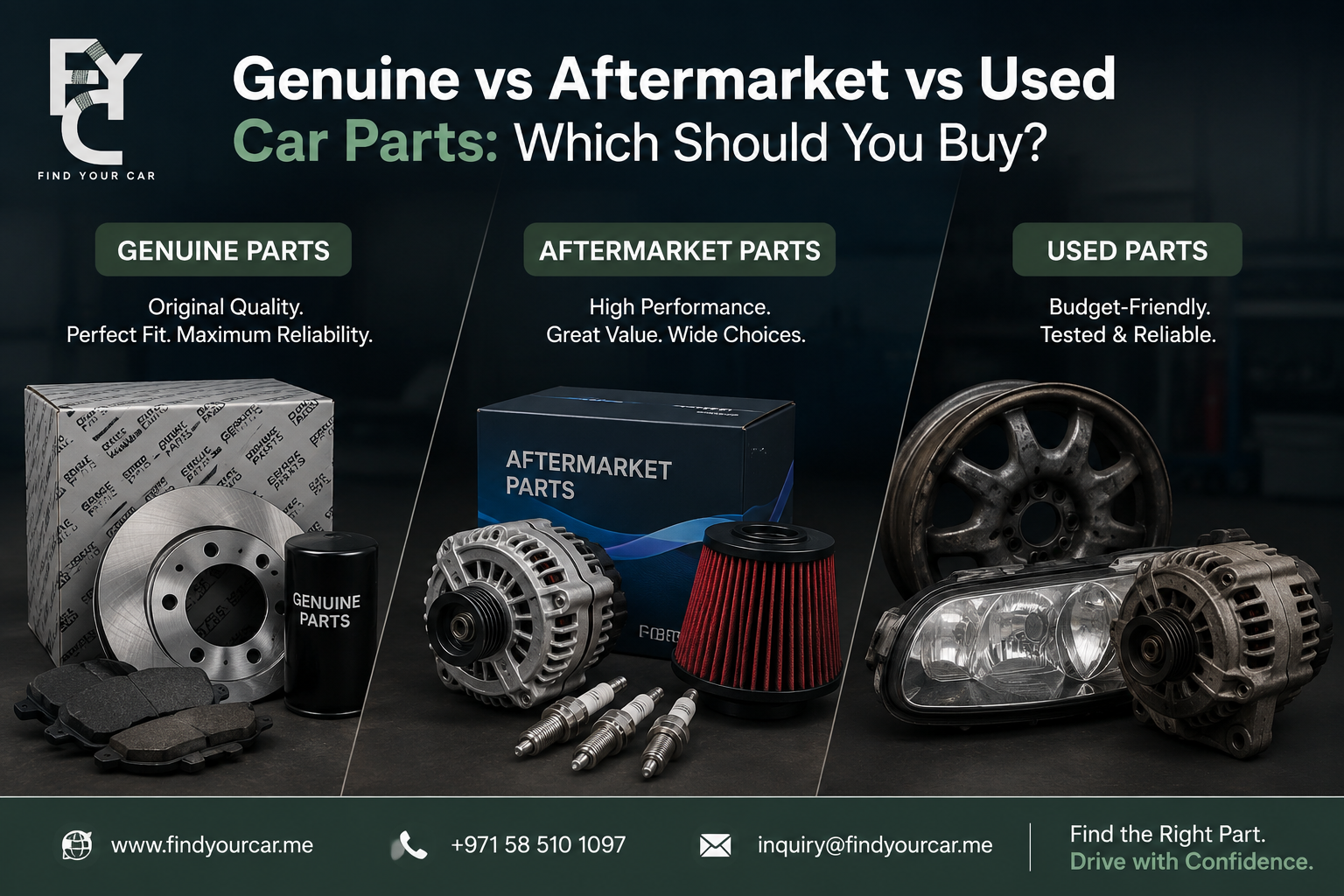
Picking a substitute car part is not always as simple as finding the cheapest or the priciest option. Genuine, aftermarket, and used parts can all look equally similar, but differences in quality, compatibility, dependability, and price can lead to a wrong decision easily. For critical components, picking solely on upfront cost affects your vehicle’s safety and performance.
The right choice depends on the part you need, your vehicle and your focus. Genuine parts offer a precise fit and manufacturer-backed quality, while reputable aftermarket parts offer good value. Used parts are a practical option for older or rare vehicles. Understanding the differences between these options can help you buy the right part without paying more than necessary.
Genuine vs Aftermarket vs Used Car Parts: What’s the Difference?
While deciding between genuine, aftermarket, and used parts, it is important to know that all three are designed to replace a component in your vehicle. They differ in who makes them, how they are tested, how they fit, and how much you are supposed to pay.
These differences are important because picking a part isn’t simply only about finding the lowest price. The right option should also provide the fit, quality, reliability, and performance your vehicle requires.
Genuine car parts
Genuine car parts are delivered under the vehicle manufacturer’s brand and are engineered specifically for its vehicles. They are made to the manufacturer’s specifications and are usually similar to parts fitted to the vehicle when it was originally built.
For example, a genuine BMW replacement component is designed to meet BMW’s specifications for the relevant model and configuration.
| Pros | Cons |
| Accurate fit and compatibility. | Usually more expensive than aftermarket or used parts. |
| Consistent manufacturing quality. | Some parts may have longer delivery times. |
| Designed specifically for the vehicle. | Genuine parts for luxury and European vehicles are costly. |
| Reliable performance. | You pay a premium for the manufacturer’s branding. |
| Manufacturer or supplier warranty is available. | —- |
Aftermarket car parts
Aftermarket parts are designed by companies other than the vehicle manufacturer. They are developed to replace original components and are available from multiple manufacturers.
The quality of aftermarket parts can vary on a spectrum. A reputable manufacturer produces a high-quality replacement, while a very cheap alternative may use lower-quality materials or offer less consistent equipment.
For example, two aftermarket brake pads may fit the same BMW model but differ significantly in materials, durability and braking performance.
| Pros | Cons |
| Usually cheaper than genuine parts. | Quality switches between manufacturers. |
| A range of manufacturers and price points. | Fitment may not always be similar to the original part. |
| Mostly readily available. | Cheaper parts have a shorter lifespan. |
| Provide excellent value when sourced from a renowned brand. | Warranty coverage differs by manufacturer and supplier. |
| —— | Poor-quality parts can impact vehicle performance or reliability. |
Used car parts
Used car parts are components removed from another vehicle and sold for reuse. They come from vehicles that have been dismantled, discontinued, or retired for other reasons.
Their biggest advantage is cost, but the condition and remaining lifespan of a used component can differ depending on its previous use.
For example, a used BMW gearbox removed from a damaged vehicle can be inspected and sold for installation in another compatible BMW.
| Pros | Cons |
| Generally the most affordable option. | Condition and remaining lifespan are uncertain. |
| Useful for older vehicles. | Previous usage and maintenance history is unknown. |
| A good solution for discontinued or rare parts. | May have hidden wear or damage. |
| Allows usable components to be reused rather than eliminated. | Warranty is often limited compared with new parts. |
| Makes expensive repairs more economical. | Compatibility needs to be checked carefully. |
When Should You Choose Genuine Car Parts?
Genuine car parts are often the suggested choice when fit, reliability and long-term performance matter. They are useful for vehicles with complex systems or components that need to work well with other parts.
Safety-critical components
For parts that directly impact your safety, picking a genuine component offers better compatibility in fit and performance. This includes braking, steering, airbag and other restraint-system components.
Newer or luxury vehicles
Genuine parts are better for newer and luxury vehicles where replacement components involve specialised electronics, sensors, or vehicle-based technology. The correct component helps maintain the vehicle’s intended performance.
Parts for precise compatibility
Some components have to match the vehicle’s exact specifications. Genuine parts can reduce the risk of compatibility issues when the same model is available with different engines, transmissions or chassis specifications.
Reliable
If you plan to keep the vehicle for many years or cannot afford repeated repairs, paying more for a genuine part is worthwhile. A better upfront cost is justified when reliability and durability are the priority.
When To Choose Aftermarket Car Parts?
Aftermarket parts are a smart choice when you want to reduce repair costs without betting on quality. The key is to pick a renowned manufacturer and make sure that the part is designed for your specific vehicle.
Routine maintenance and wear-and-tear parts
Aftermarket parts can offer good value for commonly replaced components like filters, brake pads, belts and wiper blades. Choosing a reliable brand can help you save money while maintaining performance.
When a reputable manufacturer is available
Not all aftermarket parts are created equal. Set manufacturers generally follow strict quality and manufacturing standards, making their products a wise alternative to genuine parts.
Older vehicles
For older vehicles, spending a fortune on genuine parts is not always the right decision. A quality aftermarket component offers the required performance at a lower cost, especially when the vehicle’s value has declined.
When genuine parts are more expensive
If a genuine part costs more than a proven aftermarket alternative, the cheaper option offers better value. But make sure to compare quality, warranty, compatibility and expected lifespan, instead of choosing just on price.
When To Choose Used Car Parts?
Used car parts are a practical option when keeping repair costs low is a need. They are useful for older vehicles or components that are difficult to source new, but their condition should always be checked before purchase.
Older vehicles
For an older vehicle, spending heavily on new genuine parts is not always the best financial decision. A good-quality used component offers a more affordable way to keep the vehicle running.
Discontinued or rare parts
Some older vehicles have parts that are no longer built or readily available. Used parts can provide access to components that would otherwise be difficult to source.
Expensive components
Used parts make sense when a new replacement is quite expensive. Components like certain body panels, interior parts or mechanical assemblies offer savings when sourced in good condition.
Non-safety-critical components
Used parts are more compatible with components where wear or failure has a lesser chance of creating a safety hazard. For brakes, airbags, steering components and other safety-critical parts, a new, quality replacement is generally the better choice.
How To Choose the Right Car Part for Your Vehicle?
Picking the right car part involves more than matching the build and model. The same vehicle can have multiple components based on its model year, engine, transmission, trim level and chassis configuration. If the wrong part is used, it can lead to poor fitment, nosedived performance or pricey returns and repairs.
Use your VIN or chassis number
Your VIN (Vehicle Identification Number) or chassis number is one of the best ways to check the correct part. It offers vehicle-specific information, helping suppliers to decide the right component required.
Check the original manufacturer part number
If you have the original part, check its manufacturer part number before looking for a replacement. Matching this number with the replacement part confirms the compatibility.
Confirm the make, model, and year
Always provide the vehicle’s make, exact model and model year. These details narrow down the available parts and help to prevent ordering a component for a different vehicle variant.
Consider the engine and transmission
The same model is provided with different engines and transmissions, which requires different components. Verifying these specifications is important for engine, drivetrain and transmission-related parts.
Check chassis and vehicle specifications
For some vehicles, the chassis code, production date, drivetrain and trim level affects compatibility to a degree. These details are important when sourcing parts for luxury or European vehicles with different configurations.
Verify compatibility before buying
Don’t believe an online listing instantly that says a part is “compatible”. Confirm the part number and vehicle specifications with the supplier before placing your order, especially for expensive or complex components.
Need Help Finding the Right Car Part?Give Us A Call |
Which Car Part Should You Buy?
There is no best option between genuine, aftermarket and used car parts. The right choice depends on the part you need, your vehicle, your budget and the level of reliability you expect.
| Priority | Car Part |
| Maximum reliability and exact fit | Genuine |
| Balance of price and quality | Quality aftermarket |
| Lowest upfront cost | Used |
| Hard-to-find or discontinued parts | Used |
| Safety-critical components | Genuine or renowned OEM equivalent |
| Routine maintenance parts | Quality aftermarket |
Making the Right Choice Between Genuine, Aftermarket and Used Parts
Choosing between genuine, aftermarket and used car parts depends on your vehicle, budget and repair needs. Genuine parts provide reliable fit and manufacturer-relevant quality, while reputable aftermarket alternatives can offer strong performance at a more affordable price. Used parts may also be a practical choice for older vehicles or rare components.
By checking compatibility carefully and considering the part’s importance, condition and lifespan, you can make a confident decision and avoid unnecessary costs. FYC can help you compare suitable genuine, aftermarket and used options, so you can find the right car part for your vehicle, budget and repair needs with confidence. The right part is not always the cheapest option but the one that provides the best balance of quality, reliability and value for your vehicle.
Frequently Asked Questions (FAQs)
1. Are genuine car parts better than aftermarket parts?
Genuine parts offer precise fit and consistent quality, but a reputable aftermarket part can provide similar performance at a lower price.
2. How can I make sure a car part fits my vehicle?
Use your VIN, chassis number or original manufacturer part number to identify the correct component. You should also confirm the vehicle’s model, year, engine and transmission.
3. Are used car parts safe?
It depends on the component and its condition. Used parts may be suitable for some non-safety-critical applications, but new, quality parts are generally preferable for components such as airbags, steering and braking systems.
4. Should I choose the cheapest car part available?
Not necessarily. Consider quality, compatibility, warranty, expected lifespan and installation costs alongside the purchase price to determine the best overall value.


